Showing posts with label weston a price. Show all posts

Wednesday, November 9, 2011

10 Healthy Foods My Toddler Will Eat

Penelope is a mildly picky eater.  She wont eat everything that is put in front of her like she did when she was a baby (we did baby led weaning), but there are still plenty of healthy and nutritious things she will eat.  


Here are her Top 10:


1. Eggs.  Scrambled, fried, hard boiled, or raw in her smoothie.  She eats about 2 to 3 eggs a day.


2. Steak.  She is not a fan of chicken, but she will eat an entire steak for dinner.


3. Hotdogs.  I know this may be questionable, but I personally think it is fine.  I buy organic with no nitrates and I peel the skin.


4. Smoothies.  She gets a smoothie most every day.


5. Fruit.  She loves apples, bananas and all kinds of berries, frozen and fresh.


6. Almonds.  She likes almonds and pecans.  I soak them and dehydrate them to make them easier to digest and give her about a handful when she wants them.


7. Cheese.  I wish she would eat raw cheese, but I have not found a flavor that she likes. She will only eat mossarezzla string cheese.  Which has some protien and nutrients in it, but because it's processed it really lacks the vitamins and nutrients of raw cheese.  But I figure it's a better snack than chedder bunnies.


8. Raw Milk.  Once I night weaned her, she started requesting cow's milk.  I give her about 2 sippy cups full of raw milk a day. I made the mistake of letting her have some Horizon Organic vanilla flavored milk at Starbucks one day and now I have to put a bit of it in her raw milk.  So I mix about an ounce of the Horizon vanilla in with her cup of raw milk.


9. Fish Nuggets.  When she was  a baby she would eat baked salmon, but not anymore.  I found some wild caught, Alaskan fish nuggets that are Gluten Free and she LOVES them.


10. Brocolli. Sautéed in a ridiculous amount of butter.  She will eat like 2 cups worth when I fix it.  But it has to be fresh, she wont eat it heated up the next day.


She also loves to eat soup, and on occasion: bacon, sausage, butter straight with a spoon, yogurt bites with probiotics, guacamole (but not avocados) Go Raw granola bars (sprouted and soaked grains) and the random vegetable other than broccoli, asparagus and corn mostly, and the occasional organic Elmo cracker or veggie sticks chips.

What does your toddler's eating habits like?  Is there anything you wish he/she ate?  I wish Penelope still ate fried bananas!  Oh, and liver pate. She used to love her some liver pate, now she hates.  :(


Follow Me on Pinterest Or on Facebook!

Wednesday, October 26, 2011

Do You Know Where Your Milk Comes From?

The other weekend, I took Penelope to visit Kurtz Dairy Farm in Live Oak, Florida.  As part of New Leaf Market's Annual Farm Tour.


I have been buying Kurtz raw milk for years, so I was thrilled to finally be able to go and see everything myself.

Kurt's Dairy has been in business over 20 years and they farm the right way.  The cows are pastured and very well treated.  


He has Jersey cows.  He used to have Holstein cows (bred to be huge and big milk producers) when he farmed in a more industrialized way.  Now with his Jersey cows, they hardly ever get sick, have miscarriages or still births and just over all are more healthy and fertile.

Penelope really enjoyed seeing all the cows up close and personal!

I went with a friend of mine, and we were all taken on a hay ride to visit all the different pastures and groups of cows.  He keeps a couple of separate groups, ones that are ready to breed and ones that are too young or are nursing young.

This Mama was pre.gn.ant!

And this Mama was about to give birth!  He said you can tell, by looking at her utters. They get very swollen with milk right before birth, and they loose their mucus plug right before labor begins as well.


Since I am such a birth junkie (I am a retired Doula and Birthing From Within Mentor), I thought all of this was super fascinating.  He said they all eat their placentas after birth (just like me!).  And that he lets the calf nurse for 3 months before weaning her and then bottle feeding her.  I wish he would let them nurse longer, some local farms will let them nurse for 6 months or longer.  But 3 months is a huge improvement from industrialized dairy farms where they take the new born away, directly after birth and never the two shall meet again.  

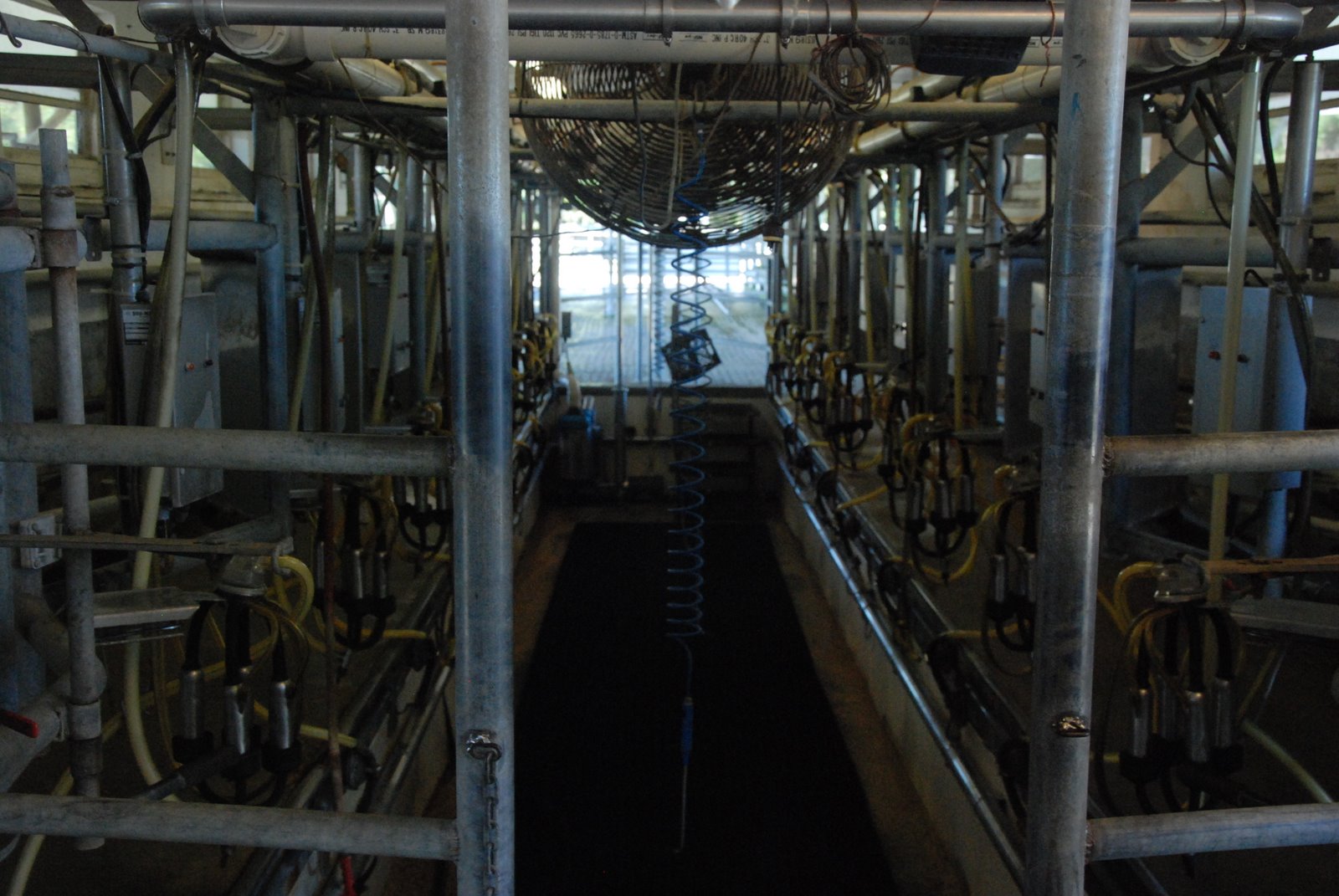
This is the pump room.   He said likes to keep them as relaxed as possible and doesn't let anyone in to watch or talk while they are pumping, to let them pump in peace.  They get more milk when the cows are relaxed.  Which cracked me up, because I remember trying to figure out a way to pump that was the most relaxing, so I could max out my supply.

The pump.  I wonder if the cows hate pumping as much as I did at first?  Or if like me, they just got used to it and it became a normal and enjoyable part of life?  They all seemed pretty happy to me!


Have you met the cows and farmer who work hard to give you milk? Do you even know where your milk comes from?
Have you ever heard of anyone drinking raw milk?


Follow Me on PinterestOr on Facebook!
Posted by Picasa

Wednesday, October 12, 2011

Cultured Fruit Leathers

When I saw this recipe, I knew I had to try it.  And of course, whenever I see I recipe, I like to figure out how to make it easier and more simplified, without loosing flavor.


I wanted to make the recipe, very similar to how I make Penelope's smoothies so she would be more likely to like them. So I omitted the salt, spices and sweetener.  My recipe is simply fruit and whey. 


I thawed mangoes, blueberries and raspberries for several hours and then dumped them in my blender.  I am not sure if my blender doesn't work well, or it is just a piece of shit, in general, but I have to thaw my fruit till they are basically mush, before it will blend it up.

Then I added some whey.  To learn how to make whey, check out this post.  It is really, really easy and you also get cream cheese when you do it!  

I used three tablespoons of whey, no real reason, just felt like it needed three instead of two.

Then I blended it up well to spread the whey through out the entire batch and put the fruit puree in another mason jar.


I put a lid on it, and put it on my counter to ferment for three days.  


Now, are you wondering why in the hell would I want to add whey and ferment it before making the fruit leather?  You can certainly leave this part out if you want.  But if you do this step, it really kicks it up a notch, in how healthy the snack is.  

Your body needs raw enzymes and good bacteria to make your digestive system work properly. And your digestive system is one of the foundations for good health.


So anywhere and anyway I can, I like to eat raw and fermented foods.


Then I spooned the mixture into my dehydrator.  Mine came with flat silicon trays, but if you don't have one, you can use wax paper to keep it from falling through the holes.

Then I turned my dehydrator on and heated it for 24 hours. I put it at a 115 degree temp, if you go much higher than that you will kill the beneficial bacteria/enzymes.

I checked it a couple of times to make sure I didn't over cook it.  Right at about 24 hours it looked like this and I felt like it was done.


Then I sliced it up and peeled it off.  And me and Penelope had a very tasty snack on the porch!

The first link below is the dehydrator I have, the Nesco Food Dehydrator.  When I was researching which one to buy, everything I read online raved about the Excalibur Dehydrator, but it was too expensive.  I am thrilled with my $50 Nesco one.  It is compact and works just fine.


Thursday, September 22, 2011

Breakfast Freezer Meals: Individual Quiche


I am a big fan of Weston A. Price and I make eggs and sausage or eggs and bacon, every single morning for myself and Penelope and sometimes Peter if he has enough time before work.  It gets pretty old.  Not the taste of it, pastured eggs from a local farm, are delicious, but the making a full meal, using the stove, cleaning up in the morning, is just time consuming.  

I was looking for a way to streamline my morning breakfast routine without giving in to eating something like cereal and milk.  I saw someone who had made and frozen breakfast burritos on Pinterest and then I remembered something my friend Bethany did years ago, I used both as inspiration and came up with my own little, frozen, breakfast meal idea.


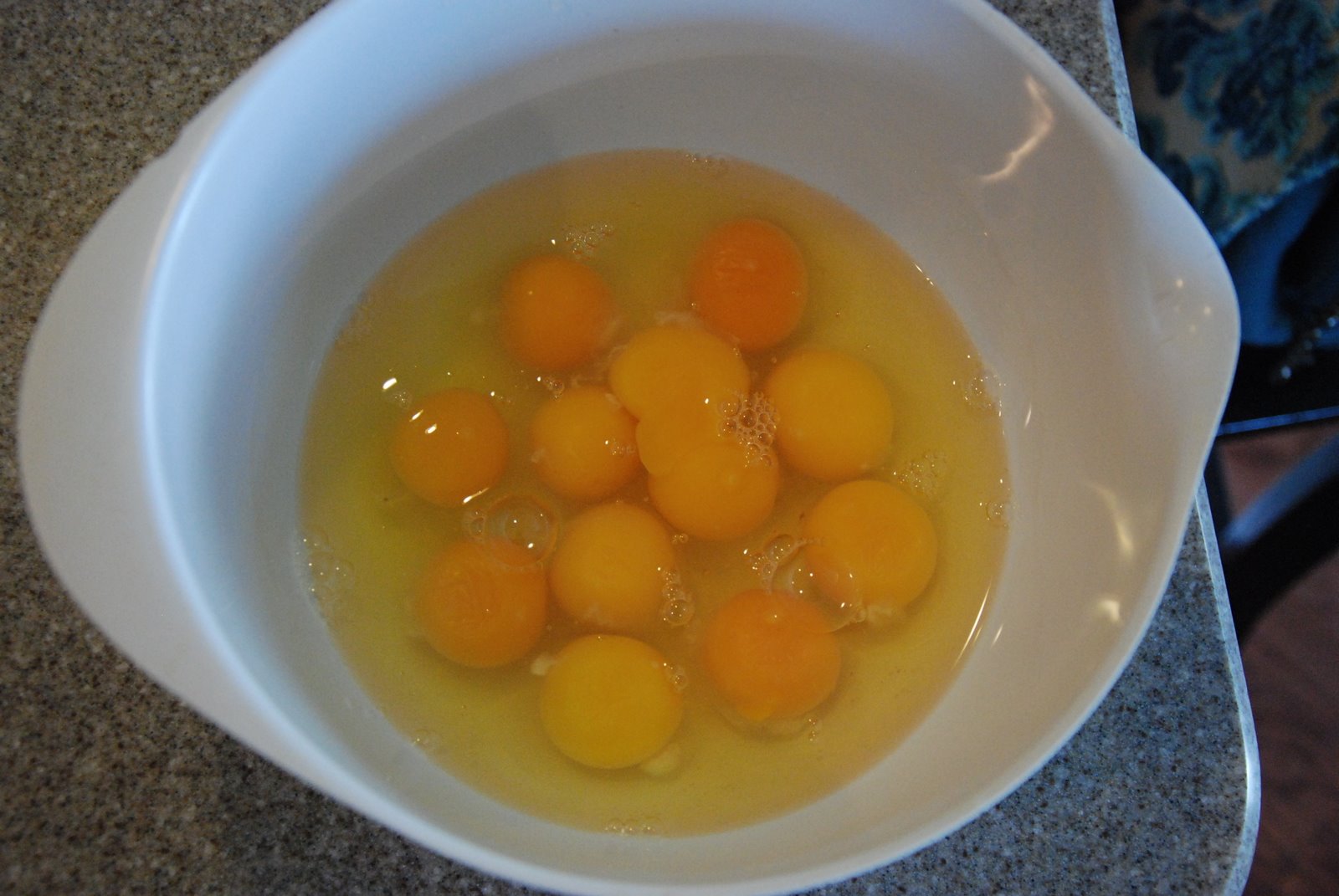
I basically made a simplified version of my quiche.   I did 12 eggs, some raw milk, a package of sausage (from a local pork farmer, cooked and chopped before adding in), a little bit of cheese and salt and pepper. I didn't measure anything, I just eye-balled it.

Then I poured it into a cupcake cooking pan.  I made the HUGE mistake of not lining them with paper cups or at least buttering the pan.  I had to throw the pan out, after three days of soaking and scrubbing, I still could not get it clean.  Don't make my mistake!

I cooked them at 350 for about 20 minutes.  Actually, I am not too sure on the time, I check on them and when they look and smell done, I stick a knife in to see if any egg sticks to the knife. If the knife comes out clean, they are done.


And then you have little individual servings of an egg and sausage breakfast!  I froze them all after they cooled, I put them on a cookie sheet to freeze them, sort of like how I freeze blueberries.  Then after they were frozen a little bit, I bagged them into small, individual, freezer bags.

I pull two out the night before I want to eat them in the morning.  It is defrosted by the morning and then I zap them in the microwave for 30 seconds.  You could warm them in your toaster oven or regular oven if you wanted to avoid using a microwave.  You should if you can, it really is bad for you, to use your microwave, but I am lazy.

Enjoy!  If you have any questions let me know.


Posted by Picasa

Monday, February 7, 2011

Toddler Smoothie Recipe

Posted by Picasa


I started making fruit smoothies for Penelope when she was about 8 months, maybe even a little younger, I can't remember. Note to self for next baby: write shit like that down!!

My love for smoothies has just gotten deeper over time.  They are a powerhouse and workhorse in my arsenal for making sure Penelope gets all her nutritional needs met in a given day. As she gets pickier and pickier, navigating her way through toddlerhood and loving the realization that she can say NO! To EVERYTHING!  She used to eat anything I put in front of her: pickles, salmon, green peppers, whatever. Now, she still eats well, she just eats only certain foods. And it changes every day. One day she is a freak about bananas and peanut butter and the next she acts like its poison and gives me a look of how DARE I offer such a thing to her.

She gets a full mason jar of smoothie per day.   Sometimes a little more, sometimes less. I give it to her throughout the day. As a snack or apart of her meal, depending on her mood. No mater what I put in it she loves it. She has never turned her smoothie down, Thank You Jesus and Knock On Wood.

As for the recipe, it varies from week to week. I play with the combination of fruit to give her variation, or because something was on sale, but I always have a base of strawberries and blueberries, her all time favorite fruit, and then add whatever else I feel like.

I mix a full frozen bag of organic strawberries, a full bag of blueberries, then like half a bag each of two other types of fruit. Then I add a half bag of veggies, like frozen peas and usually a banana or two. One mom I know adds a bottle or two of pureed green veggie baby food. I have another friend who puts whole kale or spinach in hers and another puts spirulina in hers.  You could probably get away with putting a tablespoon or two of a powder veggies supplement.

When I blend it together, I add a tiny bit of fresh juice that I juice myself. Before I had a juicer, I bought the best organic juice I could get. I put in just enough to help with the blending and to give a little sweetness to the smoothie to make sure she eats it. One of  friends puts raw honey to add sweetness.

Then I pour the big batch of smoothie into individual jam sized mason jars. I label the top with the date and put them in the freezer.  As I go through the week I pull them out and defrost it the fridge.


Now comes the really nutritious part of the smoothie!

Once the mason jar has defrosted, I pour half of the smoothie into another clean mason jar. So I have two mason jars half full of the pure fruit smoothie.

Then I add one raw egg yolk, yes I said raw.  When she is older, I will probably start adding two egg yolks.

Then I add fresh, raw yogurt, that I make myself. When I first started making her smoothies, I added coconut milk keifer and then later I used raw cow milk kiefer. And only in the last month, I have been doing yogurt instead of keifer. I think she prefers the taste of yogurt.

Then I add more fresh juice, usually spinach-apple. This juice has very little apple, and mostly spinach.

By the time I add the egg yolk, the yogurt, and spinach juice the mason jar is filled back up again.

Adding the raw egg yolk and the yogurt add lots of protein to balance out the sugar of the fruit, so her blood sugar doesn't spike after drinking it. With the egg yolk and yogurt and spinach, you couldn't ask for a more perfect snack or accompaniment to a meal.  And by not freezing the egg yolk, yogurt and spinach, she is getting tons of raw, fresh ingredients chock full of important enzymes, good bacteria and nutrients.

Now, go make your tot a smoothie!  Oh, and I drink some too!  This is a perfect snack for any mom, especially a trying-to-conceive, pregnant, nursing mom.

Monday, January 31, 2011

Raw Egg Yolk for Babies?


So this was supposed to be a post about toddler smoothies, but as I started typing, it digressed into a post about raw eggs. So here you go: a post about why raw eggs are very important to your young child's diet.


Last night my husband and I got into an all out brawl, because he noticed me putting raw egg yolk into the blender and he was all: "um, are you putting raw egg yolk in her smoothie?" To which, I replied, "um, what does it look like?!" Imagine the sarcasm dripping from my lips, because I have been putting egg yolk in her smoothie for almost 6 months. 6 MONTHS! He has seen me make it, many a time, and he is JUST now realizing I put raw egg yolk in it?


Oh, Lord Jesus, save me now,  I just might kill him.


Anyway, so then he looses his mind and says that I should have talked him about putting raw egg in her smoothie before doing it and that he doesn't think its a good idea because she can get salmonella, blah, blah, BLAH.


So then I loose my mind, because he is essentially saying I am putting her in harms way, and here I am busting my ass to give Penelope 100% perfection, in regards to her nutrition, AND I can't freaking STAND IT, when people make fear based decisions and have not done any research whatsoever to back up their purely emotional reaction. The argument ends with me stamping me feet (seriously) and yelling, "I am RIGHT and you are WRONG!"


I know, I'm so mature, right?


Once I calmed down, I apologize and say I should have known that he would like to have a say in what goes in her smoothie (I love him, but good grief, the man has to have a say about EVERYTHING) and that he needs to do his research and back up his statements and then we can have a civilized conversation about what is best for Penelope later.


So now I have to gather my research and present my argument to Peter and all of you get to come along for the ride.


First off. Know your eggs. I would never in a million years give Penelope conventional, industrial raw eggs from the grocery store. Not even regular organic, "free range" eggs. I only give her eggs that I go and pick up myself from the farmer. In a pinch, I will buy farmer eggs from New Leaf, but that rarely happens anymore.


Here's a quote one of my favorite blogs, Nourished Kitchen:


"Raw egg yolk tends to get a bad rap – and it’s unfortunate that consumers have become so fearful of their food. While everyone recognizes potential dangers of food borne illnesses, like salmonella from raw eggs, what they don’t consider is that only about one in every thirty thousand conventional eggs is infected and the incidence is even less among pastured eggs in which hens are kept in optimally healthy conditions: on grass with free access to consume the foods most natural for them. Raw egg yolk, are a potently rich source for two nutrients critical to health: biotin and choline.  They are also rich in omega-3 fatty acids, lecithin and enzymes."


Here are a couple of links from the Weston A Price Foundation website: 


This one has some information about egg allergies (usually kids are allergic to the egg white, not the yolk) and how many eggs to give a child per day (as many as they want!).


This one talks about how egg yolk supplies cholesterol needed for mental development as well as important sulphur-containing amino acids. Egg yolks from pasture-fed hens or hens raised on flax meal, fish meal or insects are also rich in the omega-3 long-chain fatty acids These fatty acids are essential for the development of the brain. Parents who institute the practice of feeding egg yolk to baby will be rewarded with children who speak and take directions at an early age. The white, which contains difficult-to-digest proteins, should not be given before the age of one year.


This one says that eggs have been a highly valued foods since the beginning of time—eggs from chickens, ducks, geese, turtles and fish. Egg yolks are the richest source of two superstar carotenoids—lutein and zeaxanthin. Not only are bright yellow yolks loaded with these fat-soluble antioxidant nutrients, they are more bioavailable than those found in vegetables, corn and most supplements. While these nutrients have a reputation of combating macular degeneration and cataracts and supporting overall healthy vision, they have a long list of other benefits, including protecting the skin from sun damage and even reducing one’s risk of colon and breast cancer.


Another quote from of one my favorite blogs, The Healthy Home Economist, from her post about The Right Way To Feed Babies, she says:


"Children who receive sufficient omega 3 fats in their diet tend to speak clearly and understand verbal direction from the parents at a very early age.    I just went back and looked at my children’s baby books and all 3 of them (even the boys) spoke short sentences by 15-17 months of age (with first words at around 7 months).   While these sentences were very simple (“Get that”, “Don’t want that”, “More of this”) I have no doubt that getting ample omega 3′s from their diet played a big part in their ease of communicating at an early age with clear enough diction to be understood by even those outside the family."


This is a quote from a local personal trainer and nutritionist: "raw eggs are soooooooooooooooooooooooo good for you!"


I mean really, do I need to say anything more after that?


Penelope is right on par with her verbal skills, which is pretty awesome, considering almost everyone (professionals we worked with when trying to get her to nurse) told me she would have speech problems from her tongue tie and TMJ.  And she astounds me by how much she understands.  Pretty much everything I say to her she understands completely.  Her perception of what I am saying is 100% right on.  Now, I do spend a fair amount of time talking to her, reading to her, doing baby sign language and other things to build her verbal skills, but I really think the egg yolks play a huge part in how smart she is.


I feel that good nutrition is so important in general, but even more so, the first 3 years.  What she is eating now is setting her up for the rest of her life.  Maybe its a little fanatical, but I think egg yolks are going to make a major difference in her mental success later in life.  I have no doubt in my mind that Penelope will be smarter and more emotionally balanced because she got enough omega- 3's in her diet early on.


Ok, ok, but why RAW EGGS you ask?


Heating the yolks destroys some enzymes, reduces certain nutrients and destroys cysteine (amino acid) which helps make glutathione, which is the master antioxidant (and p.s. Protandim also increases glutathione). They are also just plain easier to digest raw.  Raw egg yolk is the perfect complete protein.  Notice I said PERFECT, nothing comes close.


I found this analogy on another blog and I think it explains the difference between raw egg yolk and cooked well:
 
"Imagine a delicate crystal vase. Now imagine someone smashes it with a hammer and then tries to convince you that it is the exact same vase as before they destroyed it because, hey, all the pieces are still there. Well, obviously it's not the same. It not only looks different, but it can't perform the important function of holding fluids or displaying the beauty it had prior to being smashed with the hammer.
Well, an unheated egg yolk may seem similar to a cooked egg yolk, but it is far more complex and precise. We just don't appreciate that as we can't see it at the molecular level. If we could, the picture would be just as clear as with the vase."


So, to my dear husband, while I appreciate your concern for our daughter's health, and yes I should have asked you first,  please stop acting like I was putting a rice krispy treat and some goldfish in her smoothie.  I have this area of her life under control.  Not only do I have under control, what Penelope is eating is very close to absolute perfection.    You can thank me now, or thank me later,  as in, when she has a full ride to Standford Medical school.


And Mama's, if anyone gives you shit, just print this out and stamp your feet!!


Follow Me on Pinterest Or on Facebook!

Monday, October 4, 2010

Fried Bananas for Babies?


Yup.

Fried bananas for babies is a great snack for them! And for Mama's for that matter. Penelope used to love bananas and now she is sort of on a hiatus, although she will eat them dried with her dried strawberries that I get from our local Co-op.

First get you some good bacon fat. By good, I mean fat from organic, natural, grass fed, nitrate-free bacon.  Save your dripping in a glass jar the next time you cook bacon and just put it in the fridge. The picture above, is of bacon fat not yet coagulated. It will turn off white and hard in the fridge.


Then put some bacon fat in the frying pan and heat it up.  Then add some banana slices.

Posted by Picasa
Then flip them over once they start to brown and brown the other side. It only takes a few minutes. Then dry them out on a paper towel and serve to baby! Or eat them up yourself!

Here and here are some articles from the Weston A. Price Foundation website, about feeding babies and toddlers.

And did you know that babies first food should be egg yolk? And that cereal is about the worst possible thing you could give them as a first food? And that they really shouldn't have any grains till age 2?  Check it this blog post to learn more.

This post is in the Monday Mania Carnival at The Healthy Home Economist.  Check out the other links for some great REAL FOOD blog posts.

Wednesday, August 11, 2010

Liquid Gold: Homemade Chicken Stock


A few weeks ago I made chicken stock from scratch. While I was making it, I was thinking how similar homemade stock is to breast milk. You know how people say breast milk is liquid gold because its so nourishing? Well, homemade chicken stock is like that as well, and it really looks like liquid gold. The cookbook, Nourishing Traditions, quotes Ageless Remedies from Mother's Kitchen, when describing chicken stock, saying it "heals the nerves, improves digestion, reduces allergies, relaxes and gives strength.


Its also very tasty. Just yesterday, I was doing my Once A Month Cooking and I made Chicken Pot Pie with some of my broth. I have made the dish before, but this time using my own broth, it was much more flavorful.

Posted by Picasa
When I made stock before, I froze it in large mason jars and it was really cumbersome to store, defrost and actually use the stock. Back then we didn't have a deep freezer so that was part of the problem. This time I went about it differently and stored them in plastic bags.  That way, you can freeze them flat like bricks and they take up less room in the freezer.   I did several 3 cup bags and lots of 1 cup bags, so I could just pull them out as needed and not waste any stock.

Here is the recipe from Nourishing Traditions:

1 whole free range chicken or 2 to 3 pounds of bony chicken parts ( I used pieces from 4 chickens and doubled the recipe)
4 quarts cold filtered water
2 tablespoons vinegar
1 large onion, coarsely chopped
 2 carrots, peeled and coarsely chopped
3 celery sticks, coarsly chopped
1 bunch parsley

Place chicken pieces in a large stainless steel pot with water, vinegar and all vegetables except parsley.  Let stand 30 minutes to an hour.  Bring to a boil, and remove scum that rises to the top.  Reduce heat, cover and simmer for 6 to 24 hours.  The longer you cook the stock, the richer and more flavorful it will be.  About 10 minutes before finishing the stock, add the parsley.

Remove chicken pieces with slotted spoon.   Strain the stock into a large bowl and put in the fridge till the fat rises to the top and congeals.  Skim off this fat and reserve the stock in covered containers in your fridge or freezer.

Tuesday, July 27, 2010

July Once A Month Cooking


Posted by Picasa
This month I made four different meals, similar to last month. I made Mousska, Chicken Enchiladas, Chicken and Walnuts, and Minestrone Soup. All recipes can be found in the cookbook, Nourishing Traditions.

The Mousska came out great, but preparing the eggplants was a little time consuming, so if you are making it by itself it would be fine, but to do it on a big cooking day like me, its not the best choice. Its the first time I have ever cooked with lamb, so I was proud of myself for branching out a bit.

The Chicken Enchiladas, came out very tasty, even though I forgot to mix in the spices. Using chicken from a roasted chicken, instead of baked or grilled chicken breasts, makes the dish so much more flavorful. I roasted 4 whole chickens at the same time, and later made a huge batch of chicken stock (tutorial coming soon!) And again, taking the meat off of four whole chickens to use for my recipes, was also super time consuming. Not that time consuming is bad, it usually indicates a nutritious meal, but its something to consider when planning your big cooking day.

The Minestone soup came out so-so. I used orzo instead of rice, because I had it on hand and I had never cooked with orzo before and I wanted to experiment. I ended up using too much orzo and the dish was very thick, not a soup consistency at all, but the flavor was good.

The Chicken and Walnuts was my favorite! You marinate and heat up the chicken in a pomegranate sauce. Super yummy. Next time, I am going to incorporate more pomegranate and sprinkle some pomegranate seeds on top.

Here is the recipe for the Chicken and Walnuts. I hope this ok, and I am not going to get in trouble for publishing this without permission..does anyone know the rules on that?

Chicken and Walnuts:
meat from 2 cooked chickens, cut up.
2 cups crispy walnuts
2-3 cups chicken stock
2-4 tablespoons Rapadura (I just used organic sugar)
12 ounces pomegranate juice
sea salt and pepper

Put walnuts in food processor and grind. Mix with stock, pomegranate juice and Rapaduara. Heat up slowly and simmer for about a half of an hour. Season to taste. Add chicken meat to sauce and simmer about 5 more minutes until chicken is warmed through. Serve with brown rice (we ate it with cous-cous instead).